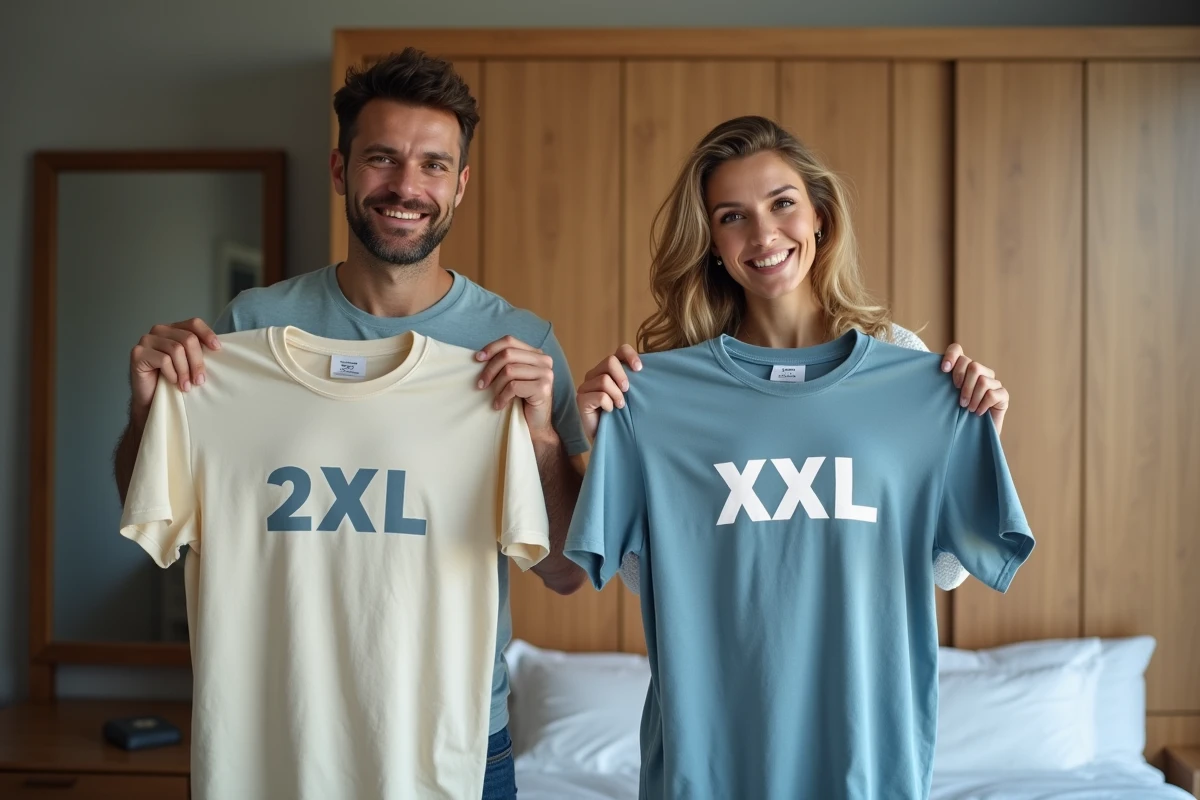
Two identical letters, a difference in number, and yet the equivalents vary depending on brands, countries, or even ranges from the same manufacturer.
Official guides coexist with often opaque internal practices, and the male-female correspondences leave room for unexpected discrepancies. The search for the right size involves deciphering these subtleties to avoid unpleasant surprises upon receiving a garment.
2XL and XXL: what are the real differences between these two sizes?
Stopping at just the letters is not enough to understand the difference between 2XL and XXL. These two sizes belong to the family of plus sizes, but their correspondence is far from universal. From one brand to another, the reality diverges. The “X” indicates a wider cut, while the number “2” in front of “XL” adds an additional dimension. In theory, 2XL comes after XL, often marking a larger chest measurement and sometimes a more generous waist measurement. XXL, placed at the same level in the size hierarchy, can, however, show different measurements according to manufacturers’ charts. A few centimeters of difference are enough to impact comfort or the overall fit.
To better understand what distinguishes 2XL from XXL, here are the most common scenarios:
- In some brands, 2XL and XXL are strictly equivalent. Elsewhere, a few centimeters separate the two sizes.
- The length of sleeves, inseam, or cut can vary, influencing how the garment falls.
- Manufacturers target different body types: some widen the bust area, while others opt for more ease around the waist.
In some cases, XXL is aimed at taller silhouettes, while 2XL prioritizes width. To avoid any confusion, it is best to consult detailed measurement charts. To go further, the difference between 2xl and xxl illustrates the diversity of interpretations according to brands. The label is not enough: each manufacturer applies its own rules. Taking the time to check remains the best guarantee to avoid unpleasant surprises.
Correspondences and size charts: men, women, main brands
The distinction between 2XL and XXL goes well beyond a simple code. In the world of the size guide, each brand imposes its own standards. For men’s clothing, size 2XL most often covers a chest measurement between 120 and 128 cm, while XXL sometimes ranges between 116 and 124 cm. On the women’s side, while the range varies less, it remains very real, especially for tops and jackets.
Here are some benchmarks to understand how these sizes are defined according to the type of garment:
- In pants, 2XL generally translates to a waist measurement of 100 to 108 cm.
- For jackets, 2XL often offers wider shoulders and a looser fit than XXL.
Relying solely on the labeling makes no sense. Precise measurements from the size guide take precedence when purchasing. The women’s guide also distinguishes between the fitted cut of XXL and the straighter cut of 2XL: a nuance that affects the look, especially for a pant or a jacket. For children, the logic changes: sizes follow a progression by age or centimeters, without adopting the adult scheme. Note that some retailers offer free shipping, making it easier to try on and allowing adjustments at no cost in the face of these sometimes decisive differences.
A careful reading of size charts allows for adaptation to each body type and purchasing with confidence, without unpleasant surprises upon unboxing.
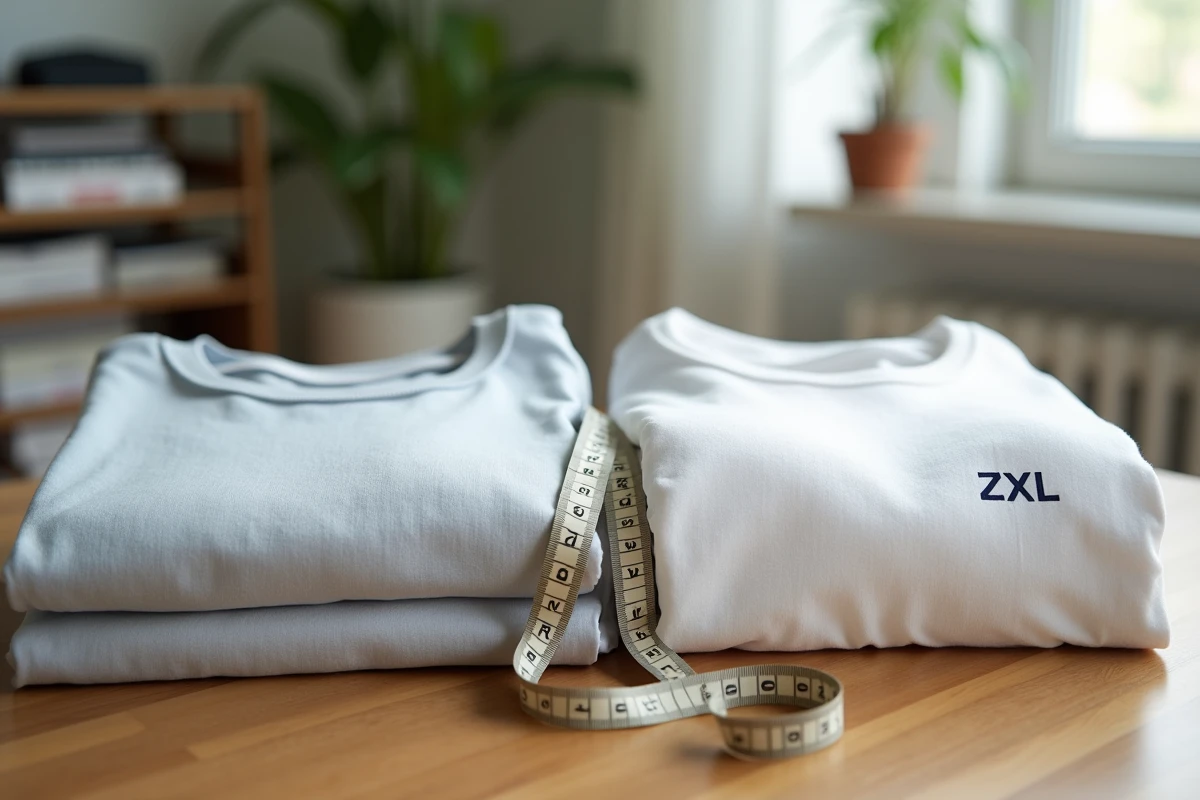
Taking measurements and understanding the impact of cuts to choose correctly
A well-positioned tape measure reveals the reality of the body. The chest measurement, the waist measurement, the inseam length, and the arm length: every number counts and guides towards the appropriate size. Between 2XL and XXL, a few centimeters of difference are enough to change the appearance of a garment, to widen the cut or to make it more fitted.
How to proceed?
To avoid mistakes, one must proceed methodically:
- Measure the chest measurement horizontally, at the widest point.
- Take the waist measurement at the dip, where the body narrows, between the ribs and the pelvis.
- For the inseam length, measure from the top of the inseam down to the ankle.
But beyond the numbers, the cut also has a significant impact. A looser 2XL will suit a broad build or those seeking comfort. A more fitted XXL will enhance the silhouette and emphasize the waist more. The difference lies in shoulder width, length, ease at the hips, or even the overall shape.
Taking the right measurements helps avoid disappointments and navigate the diversity of size guides. The description of the garment, the nature of the fabric, the design of tops or pants: every detail matters. A size is not just a number or a letter: it is a balance between style, body type, and feel. The perfect garment is one that fits the body without ever betraying expectations.