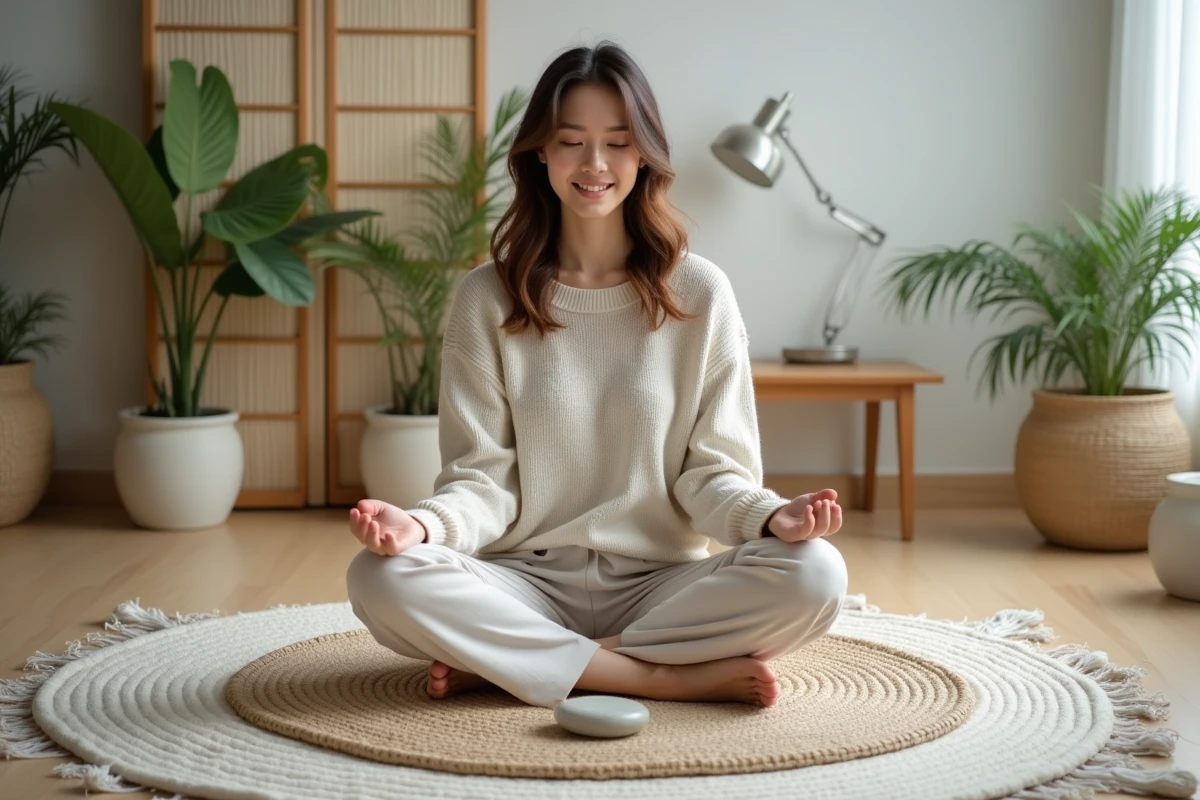
Some materials praised for their robustness turn out to be paradoxically incompatible with the quest for tranquility. Today, decor trends challenge the comfort of habits: raw materials are willingly combined with neutral ranges, far from the expected harmonies of the past.
Experts agree on one point, though without shouting it out: calm does not arise from a simple reduction of objects. Balance also plays out in the arrangement of furniture, the light that flows, and the air that breathes. Each of these elements weighs as much as the color of a partition or the choice of seating.
Why adopting a zen interior decoration transforms your daily life
Zen decoration goes far beyond the search for a pretty setting. It reflects a sincere desire to transform the space into a refuge, where every detail invites harmony and serenity. Here, we declutter, lighten, and give meaning to each chosen object. This style, nourished by Feng Shui, the wabi-sabi philosophy, or the Japandi spirit, prioritizes circulation, natural light, and the authenticity of materials. Harmony is not just a matter of colors; it embodies the rhythm and balance of the room.
A minimalist interior brings true well-being: optimized storage, natural hues, air-purifying plants. Everything contributes to establishing a calm atmosphere. To successfully achieve this transformation, nothing is better than relying on the expertise of an interior decorator. Their support adjusts the project to your constraints without imposing dogmas.
Here are some guidelines to regain tranquility at home:
- Opt for soft materials like linen, cotton, or wool for immediate comfort.
- Multiply sources of natural light, possibly enhanced by mirrors or airy drapes.
- Add meaningful objects (candles, fountains, wall art) to finalize this serene ambiance.
Want to go further? Accessing the site zenetdeco.fr allows you to gather concrete ideas and advice tailored to each universe. These resources facilitate the establishment of a peaceful atmosphere that endures and infuses day by day into your routine.
What elements and materials should be prioritized to create a soothing atmosphere at home?
Zen interior decoration revolves around three axes: simplicity, nature, and brightness. Inspired by Feng Shui, the wabi-sabi spirit, and the Japandi movement, it outlines a pure and warm universe. Natural materials should be favored: solid wood, stone, linen, cotton, rattan, wicker, jute, or wool. Raw wood structures the space while providing warmth and authenticity. On the floor, one can incorporate pebbles, marble, or slate to echo the mineral quality of a Japanese garden.
For the color palette, focus on natural hues: off-white, beige, soft gray, taupe, pastel blue, or soft green. These shades open up the space and invite calm. Abundant light, filtered through light curtains or amplified with mirrors, contributes to the soothing ambiance.
The furniture follows the same logic: simple lines, rounded shapes, low furniture. Accumulation is avoided, and storage is optimized to ensure smooth circulation and a clear space.
Here are the elements to prioritize in this approach:
- Plants like bonsai, bamboo, ficus, aloe vera, or orchids, which bring vitality, purify the air, and invite reconnection with nature.
- Symbolic objects (Buddha statue, fountain, candles, incense, paintings, rugs, cushions) to create a well-being atmosphere.
- Soft fabrics such as washed linen, cotton, or wool, perfect for an immediate cocooning effect.
Soft light, modulated by natural candles or dimmed lighting, adjusts the ambiance according to the time of day. The result: a space that invites deep relaxation, without overload or ostentation.
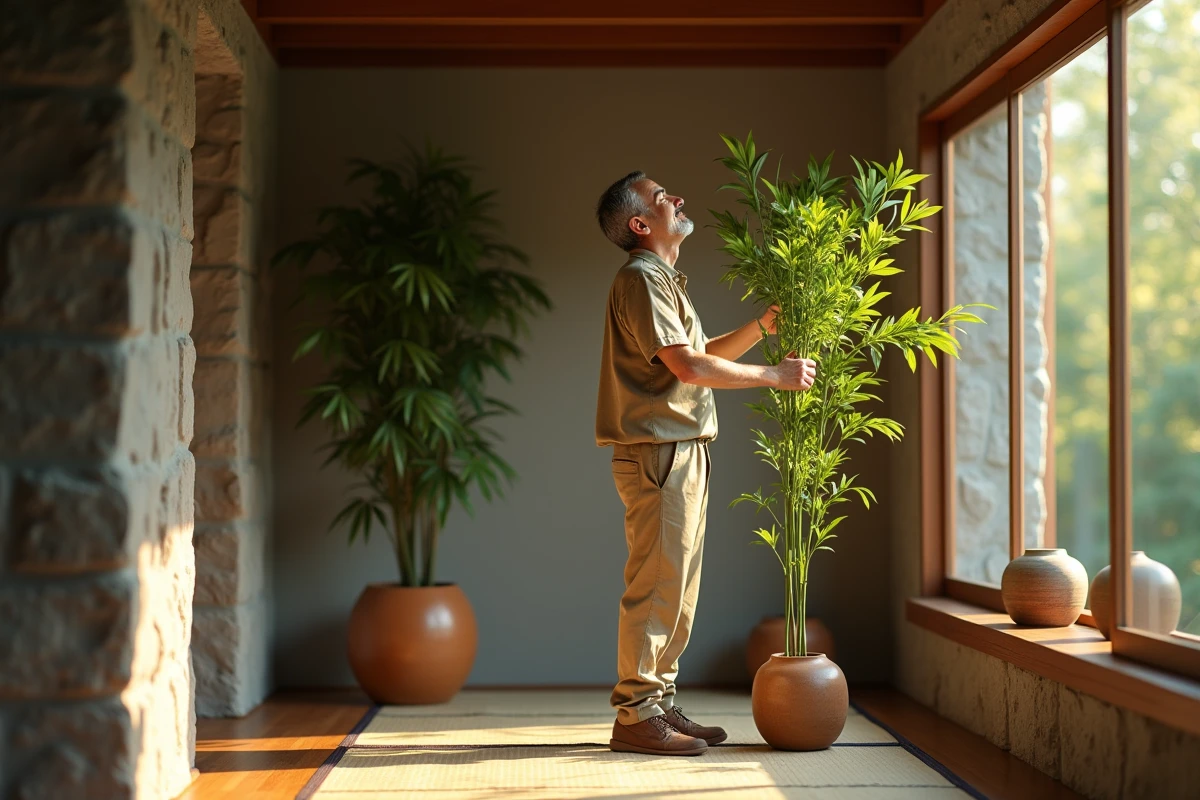
Concrete ideas and easy tips to invite serenity into every room of the house
The entrance deserves to be thought of as a decompression area: light wood bench, discreet wall hooks, natural fiber rug. We clear the passage, lightening the mind. In the living room, the goal is to create a bubble of comfort: raw wood coffee table, generous cushions, sofa with pure lines. The soft light provided by candles or an essential oil diffuser transforms the atmosphere. By eliminating the superfluous, we sustainably establish serenity.
In the bedroom, textiles take center stage: washed linen bedding, wool throw, airy curtains. A corner dedicated to meditation, with a pouf, candle, gratitude journal, encourages deep rest. Plants like aloe vera or orchids purify the air and remind us of the calming presence of nature.
The bathroom, on the other hand, lends itself to the installation of pebbles, a wicker basket, or a small fountain. The combination of water, stone, and natural light creates a relaxing setting. For each room, establish simple rituals: a few deep breaths upon waking, a minute of meditation before sleeping, a tidying gesture at the end of the day. Zen decoration shapes much more than appearance: it reshapes habits, proposes a return to essentials, transforms the home into a space for breathing. Ultimately, the success of a calming interior lies not in the multiplication of objects, but in the attention given to each choice. When calm enters every room, the home becomes the best ally against the storms outside.