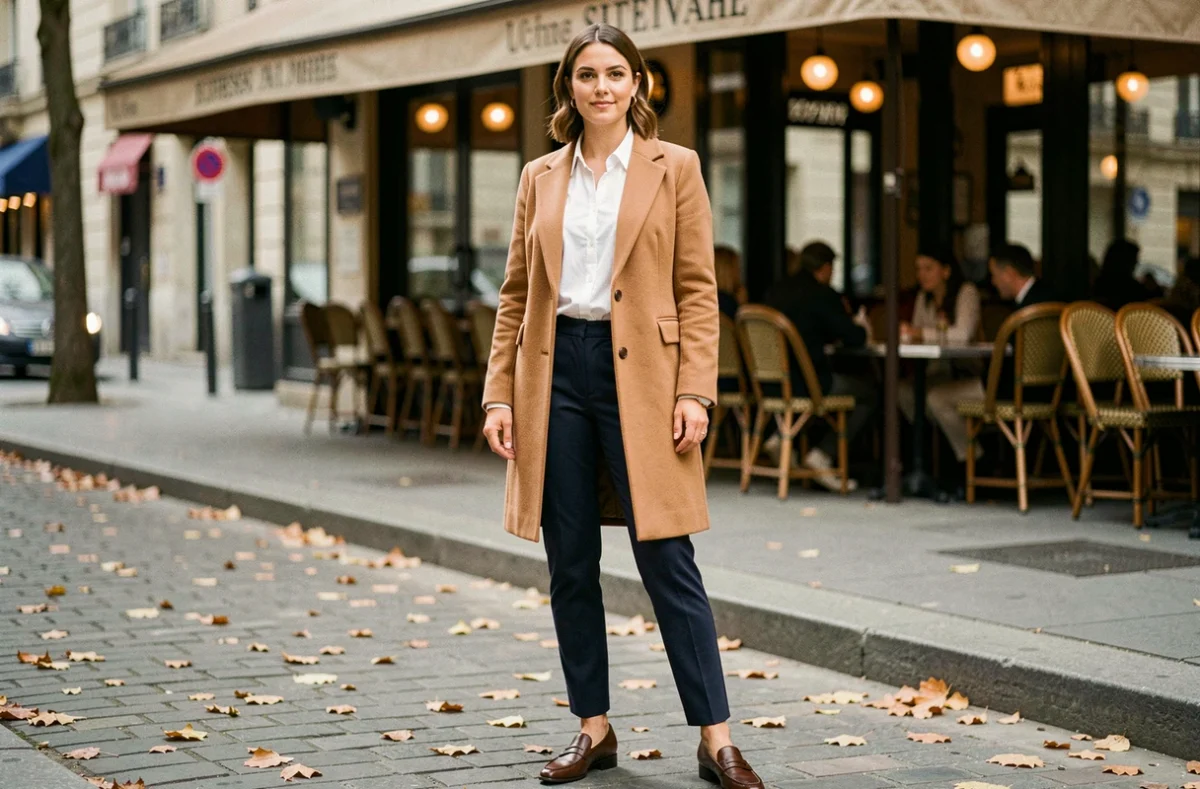
Autumn-winter 2026 blurs the categories. Retro, tailoring, bohemian, gothic, and comfort coexist in the collections without any fashion trend clearly taking precedence. Meanwhile, the French regulatory framework is evolving: the law on ultra-fast fashion modifies textile contributions, the gradual ban on PFAS in clothing comes into effect, and second-hand continues to gain ground, with significant nuances regarding its actual environmental benefit. This context reshapes the criteria for an elegant everyday style.
PFAS and water-repellent treatments: what the regulations change for your wardrobe
PFAS, these chemical substances used notably in the water-repellent treatments of coats and technical clothing, are subject to a gradual ban in France. For an everyday wardrobe, this has direct consequences on the choice of outerwear.
Brands that sell parkas, jackets, or waterproof coats must now provide information on the treatments applied. In practice, checking the composition and water-repellent treatments becomes a useful reflex before buying a coat or technical jacket, especially for pieces intended to be worn daily over several seasons.
PFAS-free alternatives exist (plant waxes, PU coatings), but field reports diverge on their actual durability against the elements. If you are looking for a high-performance coat that complies with the new standards, prioritize manufacturers who detail their treatment processes rather than those who only provide vague mentions like “natural water-repellent.”
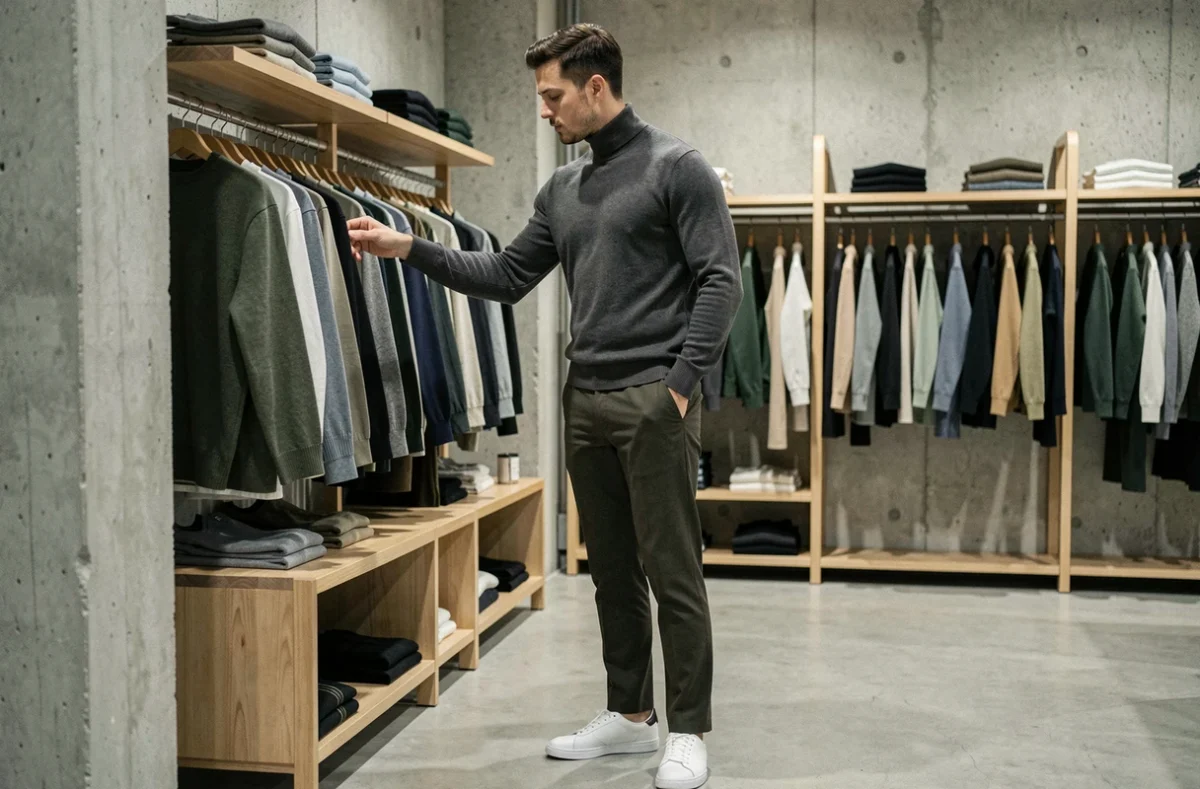
Autumn-winter 2026 fashion trends: six directions, no dominant
The autumn-winter 2026 collections offer at least six distinct currents. The new retro mixes references from the 90s-2000s with contemporary basics. Tailoring returns with more structured blazers. Chic bohemian is moving upscale. Glamour and gothic are settling into wardrobes, while embraced comfort (knits, soft volumes) remains a safe bet.
This coexistence of styles makes trends harder to follow in a linear fashion. Rather than renewing your entire wardrobe, one or two strong pieces are enough to update a closet. A retro-inspired cardigan worn over raw jeans, or a structured blazer paired with a flowing dress, is enough to anchor a silhouette in the season without over-investing.
Resources like the Belle et Bien website help identify pieces that traverse multiple trends at once, making it easier to navigate such a fragmented landscape.
Key colors and seasonal materials
The palettes for autumn 2026 remain centered on deep shades (burgundy, fir green, black omnipresent in the chic gothic vein) and a few brighter bursts inherited from spring. In terms of materials, fine knits, velvet, and textured wools dominate.
Natural fibers are gaining ground against synthetics, driven by regulations and a growing demand for comfort. Recycled cashmere and organic cotton-wool blends appear in price ranges more accessible than two years ago.
Second-hand and sustainable style: a more nuanced assessment than it seems
Purchases of second-hand clothing increased in volume between 2024 and 2025 in France. Second-hand now represents a notable share of textile purchases. This observation, documented by Refashion and analyzed by Oxfam France in a report published in September 2026, deserves nuance.
Oxfam France clearly distinguishes between donations and local reuse (solidarity thrift stores, recycling centers) and lucrative online resale. Second-hand is an environmental gain only if it replaces a new purchase, and not if it adds to it. Buying ten second-hand pieces a month in addition to regular purchases does not reduce the textile footprint.
- Solidarity reuse (Emmaüs, Oxfam, local recycling centers) ensures that the garment replaces a new purchase and funds social actions.
- Resale between individuals (online platforms) can encourage accelerated wardrobe turnover if it is not accompanied by a reduction in new purchases.
- Selective sorting of used textiles remains the last resort: a still-wearable garment should be donated or resold before being recycled.

Repairability of clothing: the fashion criterion that no one looked at
The French regulation on ultra-fast fashion introduces a modulation of textile contributions based on the breadth of ranges and the encouragement to repair. In practical terms, brands that offer repairable pieces or alteration services benefit from more favorable conditions.
For consumers, this changes the lens through which purchases are viewed. A blazer whose buttons can be replaced, a dress with accessible seams, a coat with a zip-out lining: these technical details extend the lifespan of a garment by several seasons.
Alterations and local tailors
ADEME encourages the use of local tailors and alteration services. A hem costs less than a replacement. A size adjustment on a quality piece transforms a neglected garment into a wardrobe favorite.
Some brands are beginning to integrate textile after-sales services (zip replacements, lining repairs). The available data does not yet allow for measuring the extent of this offering, but the direction is set by the regulations.
Building an elegant everyday style: concrete criteria rather than shopping lists
Everyday elegance relies less on the number of pieces than on their actual compatibility. A functional wardrobe is based on a few verifiable criteria:
- Each new piece must be able to combine with at least three pieces already present in the wardrobe.
- Materials must withstand frequent washing without deforming, which eliminates some fragile synthetics despite their low price.
- The cut must allow for layering without adding excessive volume, a technical point often overlooked.
- Repairability (buttons, seams, closures) extends the usage duration and reduces the cost per wear.
The cost per wear remains the best indicator of the actual value of a garment. A high-priced piece worn twice a week for three years costs less than a cheap basic replaced every season.
The autumn-winter 2026 fashion trends leave unusual room for maneuver: the diversity of currents allows for the composition of a personal wardrobe without conforming to a single aesthetic. The regulations, in turn, push towards more thoughtful purchases. These two movements converge towards the same point: fewer pieces, better chosen, worn longer.