
Building an effective beauty and wellness kit comes down to solving a simple equation: keep the products that deliver measurable results for your skin or comfort, and eliminate those that duplicate others or offer nothing more than a vague promise. Beauty shopping becomes clearer when you compare what each product actually does, whether it comes in a refill format, and how reliable its claims are.
Refills, bulk and standard packaging: which format deserves a place in your basket?
The format you choose affects both the cost per use and a skincare product’s actual environmental impact. The three main options do not perform equally across all criteria.
| Format | Everyday convenience | Consumer uptake | Verifiable environmental claim |
|---|---|---|---|
| Refill (pouch, eco-refill) | Easy to store, compatible with the original bottle | Clearly on the rise | Quantifiable plastic reduction stated by the manufacturer |
| Bulk (in-store refilling) | Requires a clean container and a suitably equipped store | Low uptake despite media visibility | Depends on local logistics and is difficult to certify on a large scale |
| Standard packaging (bottle, tube, jar) | Ready to use, wide selection | Remains the dominant standard | Varies by material (recyclable glass; mixed plastics are often not recycled) |
Refills are more appealing than bulk, which remains unpopular with French shoppers. Bulk shopping faces a logistical challenge: few stores offer reliable refilling for face care products or serums, and product preservation depends on the container brought in by the customer.
When choosing a refillable skincare product, check that the brand actually offers a refill in its catalogue and that it is available in France. Some brands advertise a refillable bottle but only sell the corresponding refill through their own website.
To compare formats and find brands that are genuinely transparent, Belle en Forme’s shopping section brings together curated selections filtered by product type and verifiable commitments.
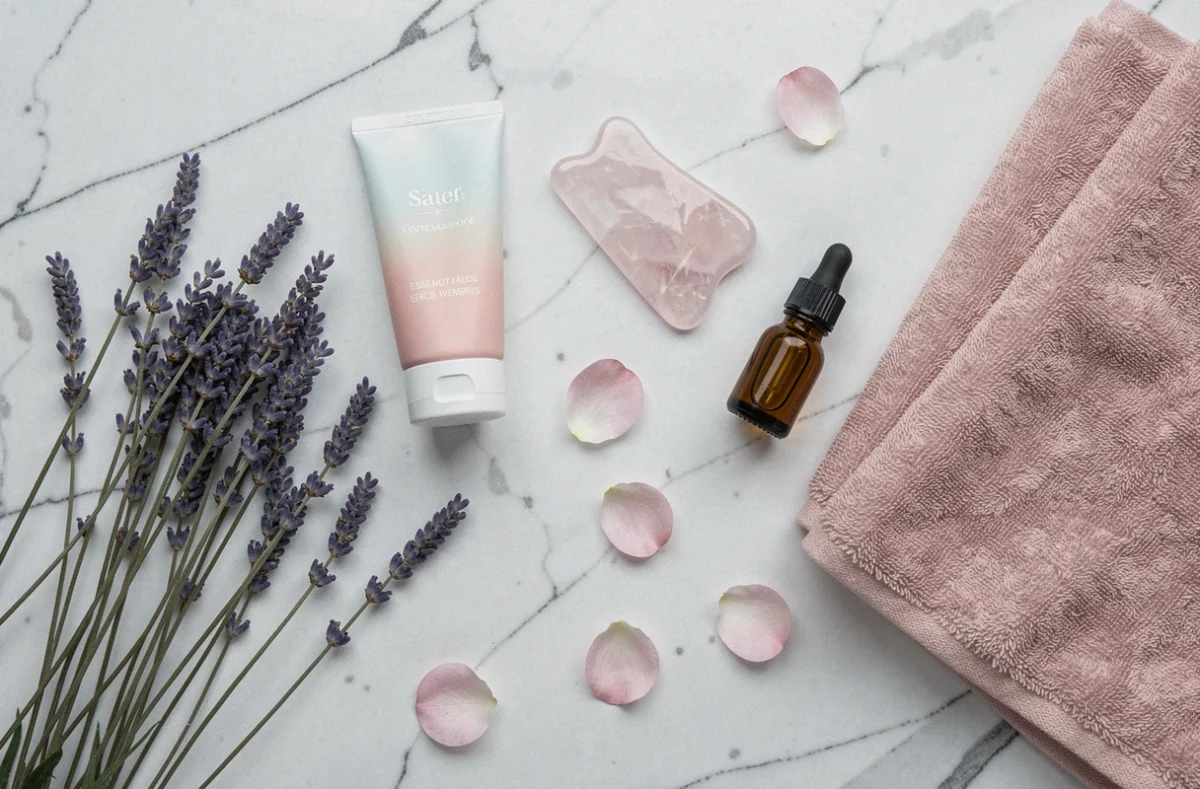
A minimalist skincare routine: separating essentials from extras
The trend towards simpler beauty routines is no passing fad. Consumers now expect every product to earn its place in their routine. Three essentials are enough to meet the skin’s basic needs.
- A gentle cleanser suited to your skin type (gel for combination to oily skin, milk or oil for dry skin): this is the only step that determines how well everything that follows will work
- A moisturiser with a short INCI list, with the key active ingredient (hyaluronic acid, glycerin, niacinamide) among the first five ingredients
- Daily sun protection of at least SPF 30, even in winter, because UV rays remain the leading modifiable cause of skin ageing
Beyond these three essentials, every addition (serum, exfoliant, mask) should address a specific concern. A vitamin C serum makes sense for treating dark spots. An AHA exfoliant can help refine skin texture. Without a specific concern to address, an extra product clutters your routine without delivering visible benefits.
How to read an INCI list before you buy
An ingredient’s position on the INCI list indicates its relative concentration. A star ingredient featured on the packaging but listed near the end is present in a negligible amount.
This quick check lets you compare two competing products without relying solely on marketing. It takes thirty seconds and helps you avoid disappointing purchases.
Environmental claims in cosmetics: what the regulations are changing
European regulations are tightening requirements for packaging and environmental claims. For shoppers, this means that products labelled “natural” or “eco-friendly” will increasingly have to back up their claims with verifiable data, rather than just a green logo on the packaging.
Learning to distinguish a specific promise from a vague green claim is becoming an essential shopping habit. A certified label (Ecocert, Cosmos Organic, Natrue) requires a public, audited set of standards. Terms such as “clean”, “green” or “planet-friendly”, without certification, guarantee nothing measurable.
Certified organic brands in France generally state the exact percentage of ingredients of natural origin and identify the standard they follow. Brands that rely on vague claims about “naturalness” without figures or independent certification give consumers no way to verify them.

At-home beauty devices: gimmick or skincare add-on?
LED masks and at-home skincare devices are becoming more visible, particularly among younger consumers. Their presence in beauty shopping ranges has grown rapidly in recent years.
Buying a device does not guarantee results. Anti-ageing or radiance claims should be assessed on a case-by-case basis, by checking whether the manufacturer cites clinical tests or independent studies. An LED device for home use does not have the power or follow the same protocol as equipment used in a dermatology clinic.
What to look for before buying
- The stated wavelength: this information should be clearly listed on the product page so you can compare devices
- CE marking, which is mandatory for all electrical devices sold in Europe
- Verified reviews posted after several weeks of use, rather than just day-one feedback, which mainly reflects the placebo effect
A well-chosen device can complement a skincare routine. It cannot replace one. The cleanser-moisturiser-SPF trio remains the foundation, with or without a high-tech gadget.
You can count the beauty and wellness essentials on one hand. Everything else comes down to personal choice, as long as you check the format, ingredients and credibility of the claims before you pay.