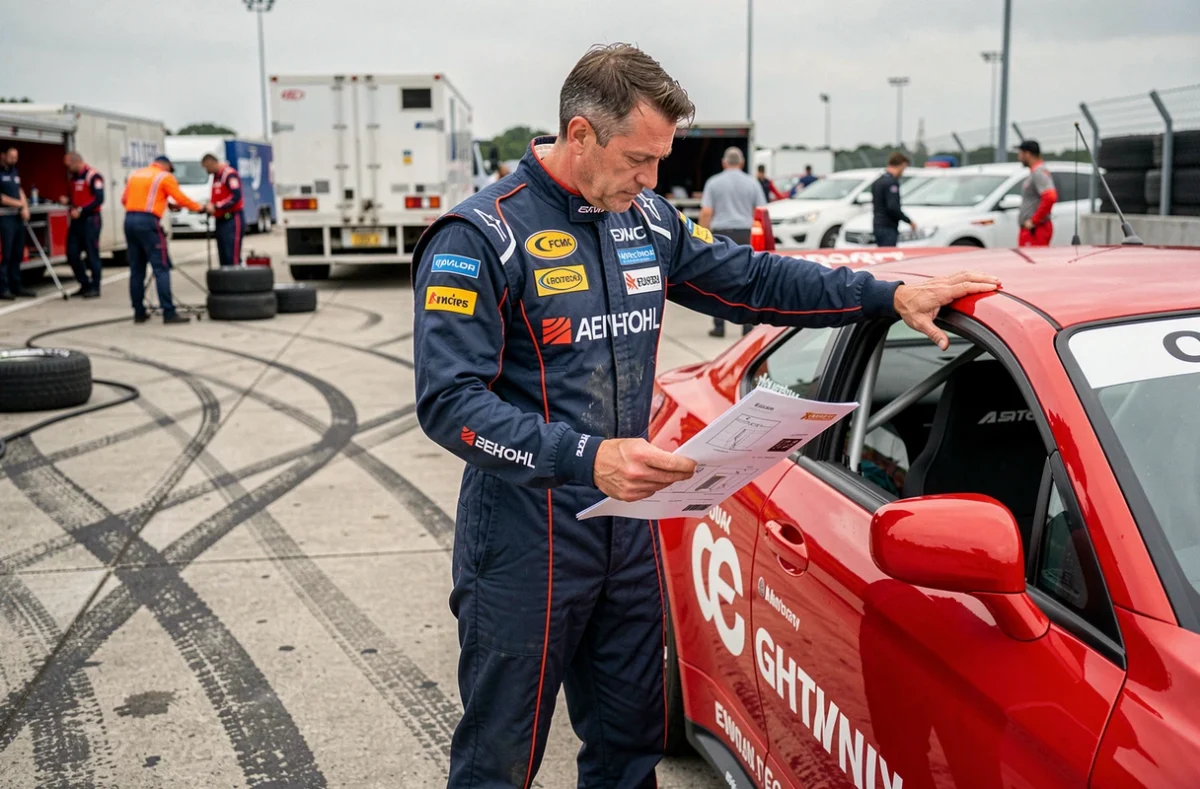
A race car is not defined by raw power. It is defined by whether it complies with the regulations, can handle repeated days on track, and fits within the total budget for a season. Before looking for a model, choose a discipline, identify the events you can enter, and check the technical requirements with the organizer or your local ASA. The purchase price is only a fraction of the true cost.
Sporting regulations and homologation: the first filter before buying
It can be tempting to buy a modified car at an attractive price on the used market. A common pitfall is discovering after the purchase that its modifications do not meet the requirements of the intended category—or, worse, those for the current season. Technical regulations change every year, and a car that complied in 2024 may no longer comply in 2026.
The sensible approach is the opposite of what instinct suggests: choose the event first, consult its technical regulations, and only then look for a car. A regional rally, an open track day, and an amateur endurance race do not have the same safety, equipment, or licensing requirements.
For anyone looking to consult Mikado Racing to find a race car, cross-checking listings against the regulations for the target category is an essential first step.
The distinction between a track day and an official competition also matters for insurance. An open track session may allow a road car, but standard car insurance often excludes cover for track use. An official event, on the other hand, requires a licence, an entry, and verified technical compliance.
True cost per race day: the calculation that changes everything
The natural instinct is to compare purchase prices. A more reliable approach is to calculate the cost per track day or event, including all expenses beyond the advertised price.
Costs that can outweigh the purchase price
- Tyres are a major recurring expense: a set of semi-slicks can wear out after just a few track days, and prices vary considerably depending on size and brand.
- Brake consumables (pads, discs, and fluid) need replacing much more often than with road use, especially on a heavy, powerful car.
- Transporting the car to the circuit (trailer, transporter, tolls, and fuel for the tow vehicle) adds to the cost of every outing, as do day or event entry fees.
- Coaching or co-driving, spare parts to keep in stock, and specialist track insurance round out the bill.
A modestly powered but lightweight car, with affordable brakes and readily available tyres, often costs less per day than a prestigious model that puts a strain on the budget every time it goes out. The best first race car is often the one you can afford to enter regularly.
Putting the calculation into practice
Consider two options. A used compact sports car bought at a reasonable price, with tyres and brakes readily available from mainstream retailers. Against it, a more powerful coupé that costs a little more to buy, has consumables that cost twice as much, and requires a specialist transporter.
Over a season of six to eight outings, the difference in total costs can far exceed the gap in initial purchase price. A driver who races regularly will improve faster than one who takes a fast car out twice a year.
Rally6 and entry-level categories: new ways into competition
The FIA World Motor Sport Council has announced new homologation and technical regulations for the Rally6 category, designed as an entry-level step into competition. The category draws on France’s FR6 regulations and prioritizes production-derived components to keep costs down while maintaining safety requirements.
This kind of initiative reflects a broader trend: making motorsport accessible without requiring an enormous budget. For a rally beginner, choosing a category with strict regulations and standardized components limits both preparation costs and the risk of non-compliance.
The same principle applies on circuit with one-make series. A field where all the cars are identical—or nearly so—reduces the technical arms race and puts the focus back on driving skill. One-make categories offer the best learning-to-budget ratio.

Used race cars: checks to make before signing
The used motorsport market is extensive, ranging from small Japanese sports cars to racing sports prototypes and prepared saloons. Buying a car that has already been prepared can save time, provided you check several technical points before committing.
- The car’s history: number of events entered, any incidents, and engine mileage since its last service or rebuild.
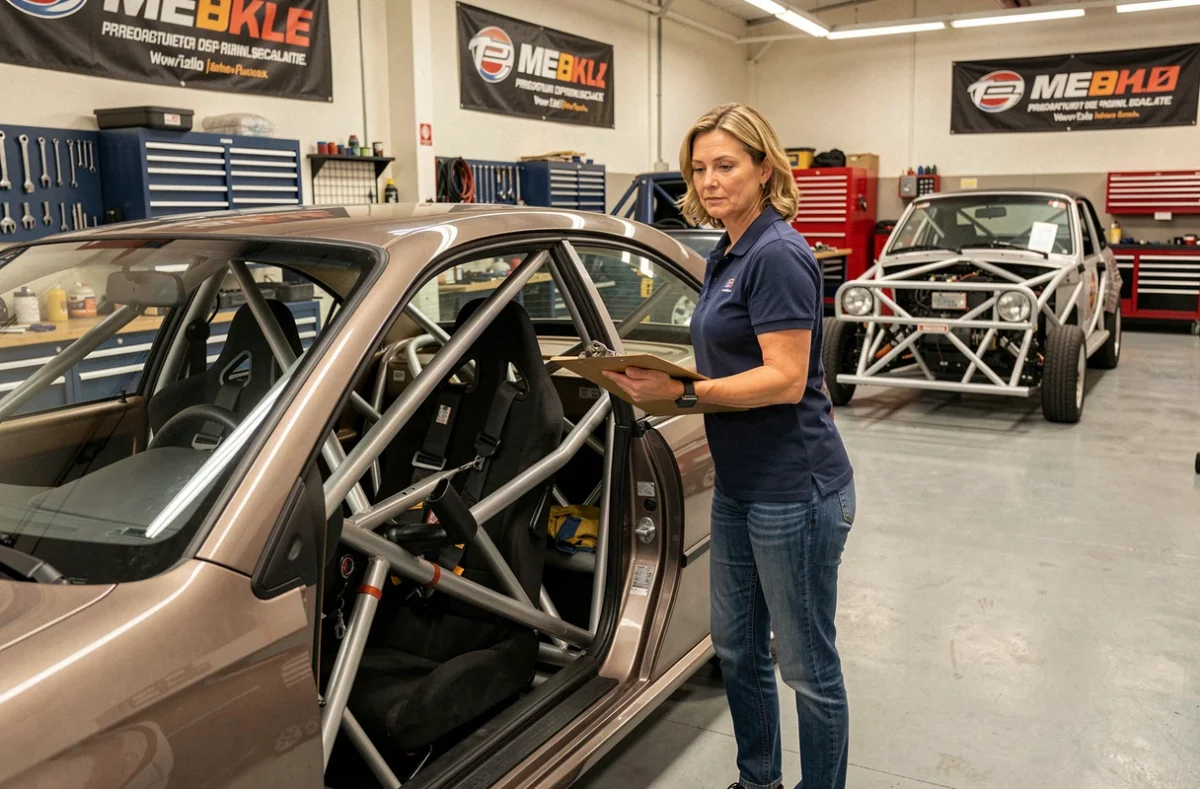
- Compliance with the regulations for the intended category: roll cage, harnesses, fire extinguisher, and battery cut-off switch—all of which have homologation expiry dates.
- The condition of safety equipment: a custom-welded roll cage may not be eligible for homologation in every category, and an expired harness must be replaced before entering any event.
A reputable seller will provide the technical passport, preparation invoices, and event history. Missing documents should raise as much concern as an unusually low price.
Choosing a race car is less about emotion than practical calculation. Between two appealing models, the one that lets you race eight times a season instead of three is the one that will make you a better competitor. Consistent time behind the wheel builds experience, and experience will always catch up with horsepower.