
An apartment advertised as such in a property listing does not guarantee that its occupant can live in it freely, rent it out as a tourist furnished rental, or conduct a business there. The legal classification of the premises, their history of use, and the condominium rules can create real differences between what the market calls an “apartment” and what the law recognizes as premises for residential use.
Use classification and commercial description: two distinct realities
Under planning law, the “residential” destination is divided into two sub-destinations: housing (households’ primary, secondary, or occasional residences) and accommodation (student residences, hostels, serviced residences). An apartment generally falls under housing, but housing is not synonymous with apartment.
A property may be called an apartment in a deed of sale or on a property listing website while having a status under planning law or condominium rules that limits how it can be occupied or rented out. The reverse is also possible: a former commercial premises converted into a home may still be described in the condominium bylaws as having a use classification that was never updated.
Proof of residential use is based on criteria that include the premises’ use between 1970 and 1976, or during the thirty years preceding an application or dispute. To better understand premises for residential use, it is therefore necessary to examine the use-classification documents rather than the property’s commonly used description.
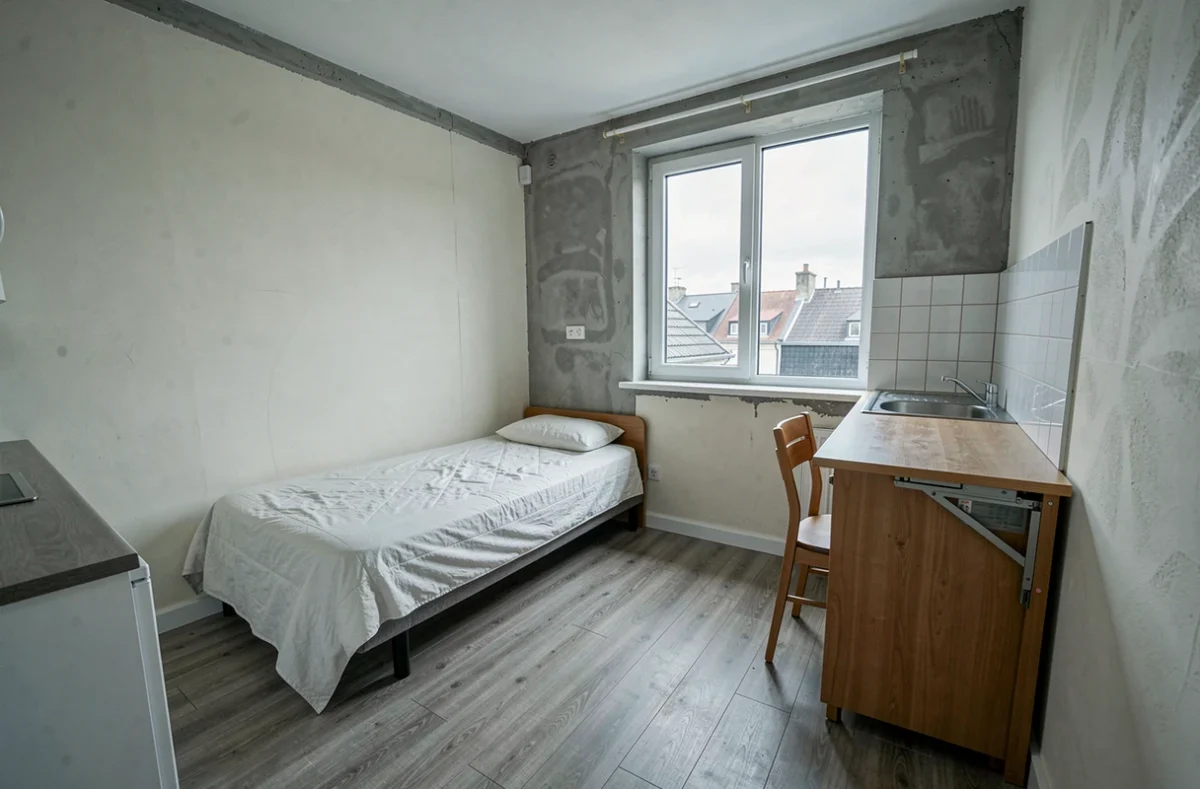
Comparison table: apartment, housing, and premises for residential use
| Criterion | Apartment (common description) | Housing (planning sub-destination) | Premises for residential use (legal framework) |
|---|---|---|---|
| Definition | Commercial term for a private unit in a multi-unit building | A household’s primary, secondary, or occasional residence | Any premises legally designated for residential use, as evidenced by administrative documents |
| Source of classification | Listing, deed of sale, common usage | French Urban Planning Code (sub-destination) | French Construction and Housing Code, condominium bylaws, tax history |
| Change-of-use authorization required for tourist furnished rentals | Depends on the unit’s actual legal status | Yes, depending on the municipality and primary-residence status | Yes, with requirements that vary by municipality |
| Possible condominium restrictions | Yes, if the bylaws prohibit certain activities | Yes | Yes, including by a vote under the majority rule in Article 26 since 2024 |
This table highlights a point that is often overlooked: the “apartment” column does not correspond to any standalone legal category. Apartment is a term of common usage, not a legal classification.
Tourist rentals and change of use: what the November 2024 law changed
Since November 21, 2024, the law has expressly included tourist furnished rentals in the change-of-use regime. Requirements depend on the municipality, primary-residence status, and the type of premises. The label “housing” alone is not enough to determine which steps are required.
The law also gave municipalities the option of reducing the annual limit on tourist rentals of a primary residence. The national limit can be lowered by a reasoned resolution to as few as 90 days per year. Checking local rules is now a necessary first step before offering a property for short-term rental.
Condominiums and bans on tourist furnished rentals
In condominiums, the 2024 law allows certain bylaws to be amended by a vote under the majority rule in Article 26 to ban tourist furnished rentals in residential units used as secondary residences, where the bylaws already prohibit commercial activities in non-commercial units. The right to live in a unit and the right to operate it as a tourist rental are distinct.
A buyer who purchases a condominium apartment intending to rent it out through a tourist rental platform may find themselves unable to do so if the bylaws have since been amended, or if the unit was never classified as residential premises in the strict legal sense.
Use-classification documents: how to verify a property’s actual status
The 2024 law broadened the ways in which residential use can be proven. The main criteria are:
- The premises’ use between 1970 and 1976, the reference period for many municipalities subject to the change-of-use regime
- Actual use during the thirty years preceding an application for a change of use or a dispute
- Whether a subsequent change-of-use authorization was granted that altered the original classification
In practice, the status of commercial premises converted into housing in the 1980s without formal authorization may be challenged decades later. Use-classification documents matter more than the property’s commonly used name.
Planning permission and prior declaration
Converting housing into professional or commercial premises requires planning permission (a prior declaration or building permit, depending on the scope of the work). The reverse—changing commercial premises to residential use—also requires an application, even if the work involved is minimal.
An unauthorized change of use in a municipality subject to this regime can result in financial penalties and an obligation to restore the premises to their previous condition.

Tax implications based on the premises’ designated use
A property’s designated use determines the applicable tax regime. Premises for residential use are subject to the housing tax (for secondary residences) and property tax on built properties. Professional or commercial premises are subject to the business property tax.
Changing from one category to another also affects the cadastral rental value used to calculate these taxes. A property owner who changes the use of their property without filing the required declarations may face a tax reassessment covering several years.
- Revision of the cadastral rental value to reflect the new use
- Possible retroactive application if the change was not declared
The distinction between an apartment and premises for residential use is not a matter of semantics. It affects the right to occupy, rent out, convert, and tax a property. Before buying, reviewing the condominium bylaws and checking the property’s use history with the planning department remain the two most reliable checks.