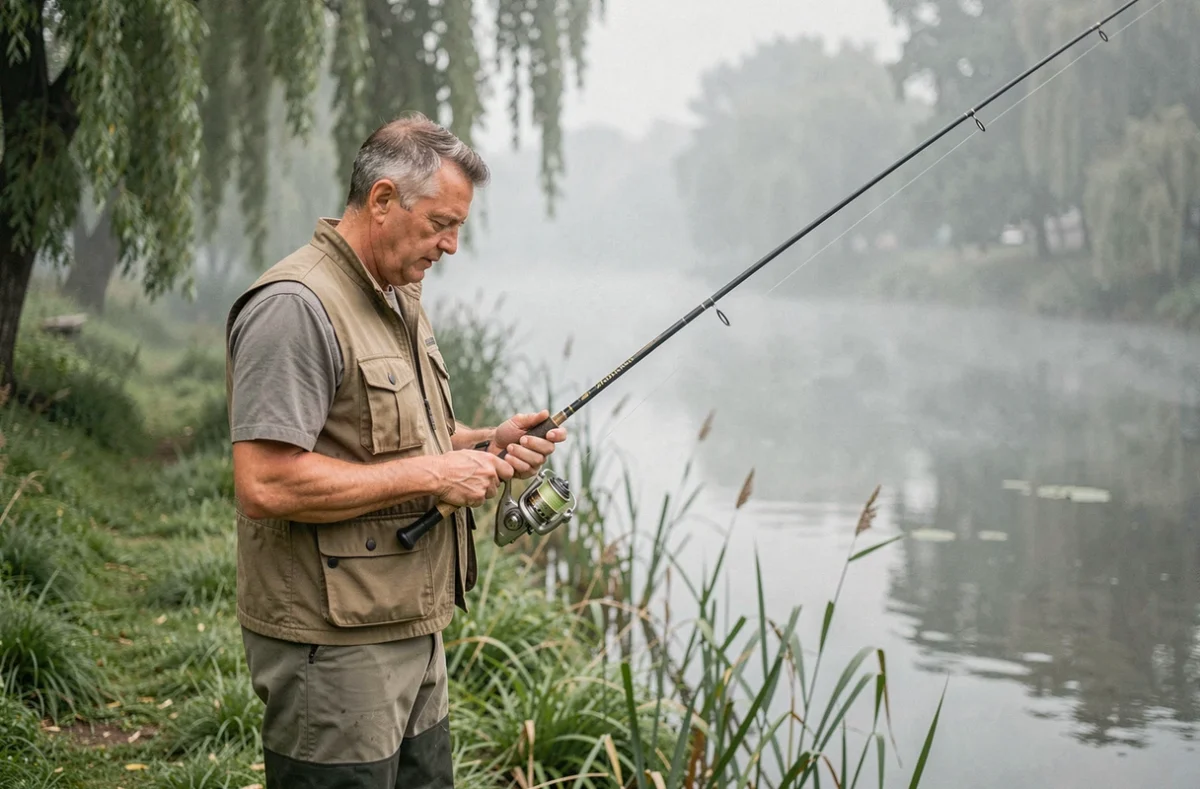
The fishing tackle market offers thousands of products, from rods and reels to lines and accessories. With so much choice, there’s a real risk of buying too much or choosing the wrong gear, especially since the fishing technique and setting (freshwater, shore, or boat) each come with their own requirements. Before considering brands or budget, choosing fishing tackle comes down to a few technical trade-offs that product catalogs don’t always explain clearly.
Regulations and permitted gear: what the label doesn’t tell you about fishing tackle
Gear suited to a particular technique isn’t necessarily permitted everywhere. The 2026 sea fishing rules impose restrictions on the number and type of gear allowed on board, as well as mandatory labeling for certain unattended gear. In freshwater, regulations also vary by species and region.
Before investing in specialized gear, make a habit of checking the official rules that apply to your location and the date of your trip. An angler who buys a set of fish traps or a second set of rods for surfcasting may find themselves in breach of local regulations if they limit the number of permitted items.
On angelsport.be, product pages make it easy to compare the technical specifications of different items, but no retailer can guarantee that a particular setup complies with the rules at a specific fishing spot. It’s up to the angler to check.
Rod action and power: two commonly confused specifications
Most guides explain rod lengths for different techniques, but the most important choice is between action and power. Power refers to the load a rod can handle before it bends excessively. Action describes where the rod bends: a fast action bends mainly in the top third, while a slow, parabolic action bends along its entire length.
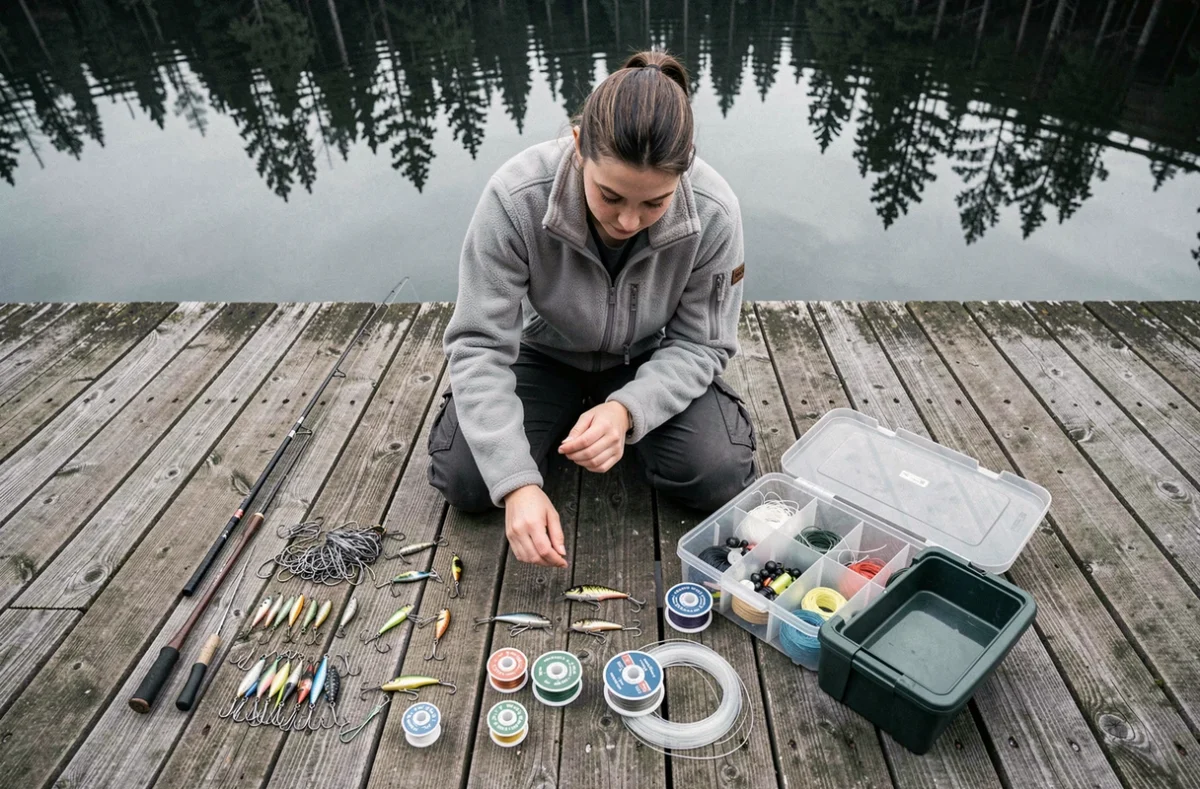
The right combination of these two specifications depends directly on the fish you’re targeting and the technique you’re using. For freshwater lure fishing, a fast action offers greater casting accuracy and better control over lure movement. For feeder or float fishing, a more progressive action absorbs the fish’s head shakes and reduces the risk of it coming off the hook.
Confusion often stems from manufacturer labels, which don’t all follow the same standard. A rod labeled “Medium” by one manufacturer may be equivalent to another brand’s “Medium-Heavy.” Comparing the stated casting weight ranges is more reliable than relying on power labels alone.
Reels: gear ratio and drag matter more than bearing count
The number of ball bearings is the main selling point for most reels. A reel with ten bearings isn’t necessarily better than a five-bearing model if the materials are of different quality. The retrieve ratio (the number of spool rotations per turn of the handle) and the smoothness of the drag are more important factors in practice.
A high gear ratio suits lure fishing, where quickly retrieving line between casts saves time. A lower ratio provides more torque, which is useful for hard-fighting fish or bottom fishing techniques. As for the drag, smoothness matters more than maximum drag power: a drag that locks up or releases in jerks can cause line breaks, even when set to the right tension.
Fishing line: monofilament, braid, or fluorocarbon depending on the spot
Line choice is often treated as a minor detail, but it affects sensitivity, casting distance, and how visible the line is in the water.
- Monofilament is the most versatile option: its stretch absorbs shocks and helps compensate for mistakes when setting the drag. However, that stretch makes it harder to detect subtle bites at a distance.
- Braid has a thinner diameter for the same breaking strain and transmits vibrations directly. It’s a popular choice for lure fishing and techniques that require good sensitivity, but it’s less abrasion-resistant around rocks and other obstacles.
- Fluorocarbon is nearly invisible underwater and is mainly used for leaders when targeting wary fish. Its cost and stiffness make it less common as a main line, except for certain finesse techniques.
Pairing braided main line with a fluorocarbon leader is a common setup for lure anglers looking to combine sensitivity with low visibility.
Safety by the water: an expense worth budgeting for
Articles about fishing tackle rarely treat safety as an essential part of your gear. The conditions at your fishing spot (slippery banks, rocks, currents) and the weather call for choices that have nothing to do with your fishing technique.
- Footwear with lugged soles reduces the risk of slipping on wet banks or rocks.
- Protective glasses shield your eyes from glare, as well as from a hook or lure flying back toward your face at high speed.
- Keeping your phone in a waterproof pouch lets you call for help in an emergency and, at sea, report your catch within the required time limits.
- On a boat or a steep bank, a life jacket suited to your build is a basic precaution.
Your choice of safety gear depends more on the location and conditions than on the fish you’re targeting. An angler float fishing from a stable dock has different needs from someone fishing from a float tube on a wind-exposed lake.
The temptation to accumulate fishing tackle affects anglers of all levels, from beginners to experienced fishers. A well-matched rod and reel, line suited to the fishing spot, and a few safety accessories will cover most situations. The rest comes with experience on the water, not from browsing a catalog.