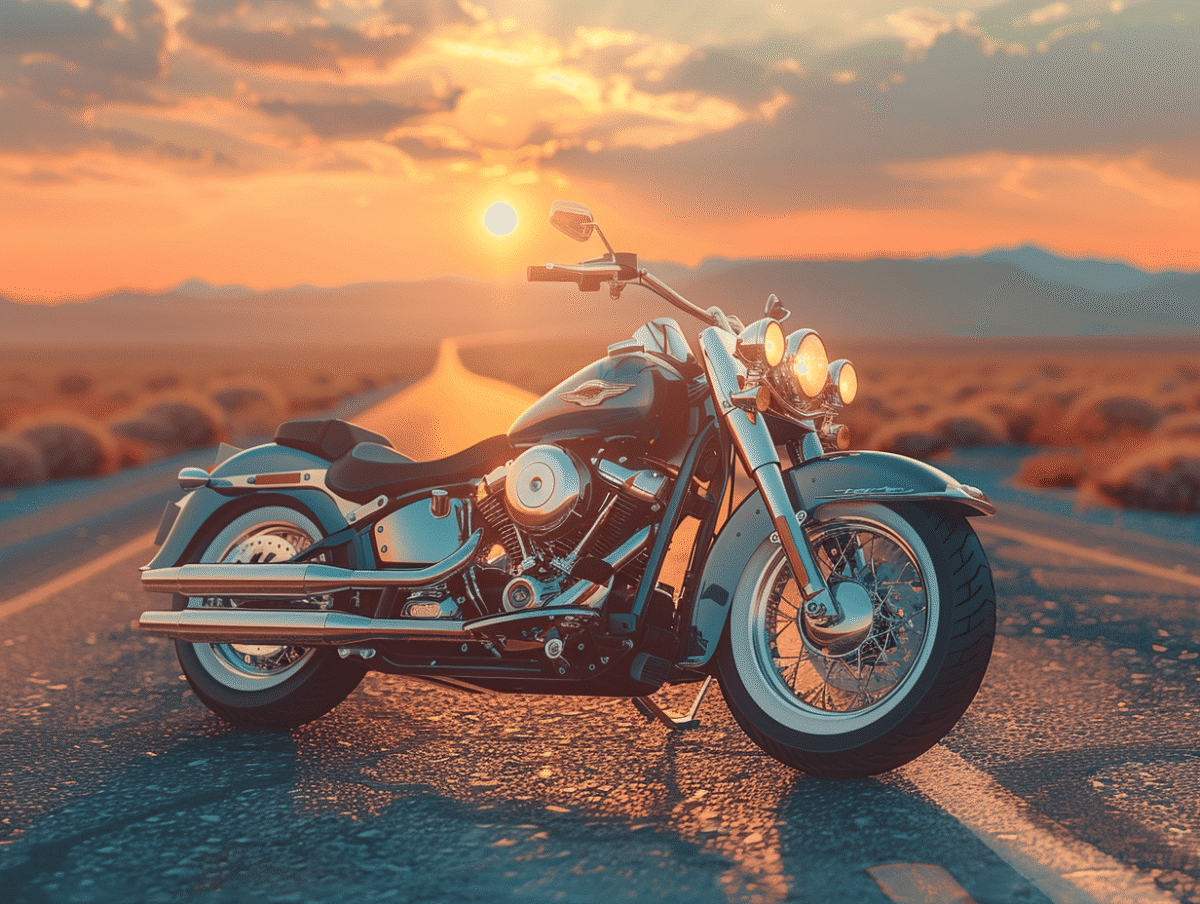
The motorcycle, much more than just a means of transportation, stands as a true cultural icon, traversing the ages with an aura of freedom and rebellion. From the Harley-Davidson chopper ridden by Peter Fonda in ‘Easy Rider’ to the formidable futuristic motorcycle in ‘Akira’, these two-wheeled machines have captured the collective imagination and forged a powerful imagery around the figure of the biker. They embody eras, social movements, and deep aspirations, standing out as significant symbols of films that have marked their time and influenced many aspects of popular culture.
From Easy Rider to Akira: the evolution of iconic motorcycles in pop culture
Easy Rider, an emblematic film from the late 60s, laid the groundwork for the motorcycle as a symbol of freedom and nonconformity. Peter Fonda, riding his motorcycle named Captain America, embodied a generation in search of emancipation and meaning. This film, beyond its status as a classic of cinema, anchored the motorcycle in the collective imagination, no longer just as a means of transport but as an expression of a powerful and dissenting counter-culture.
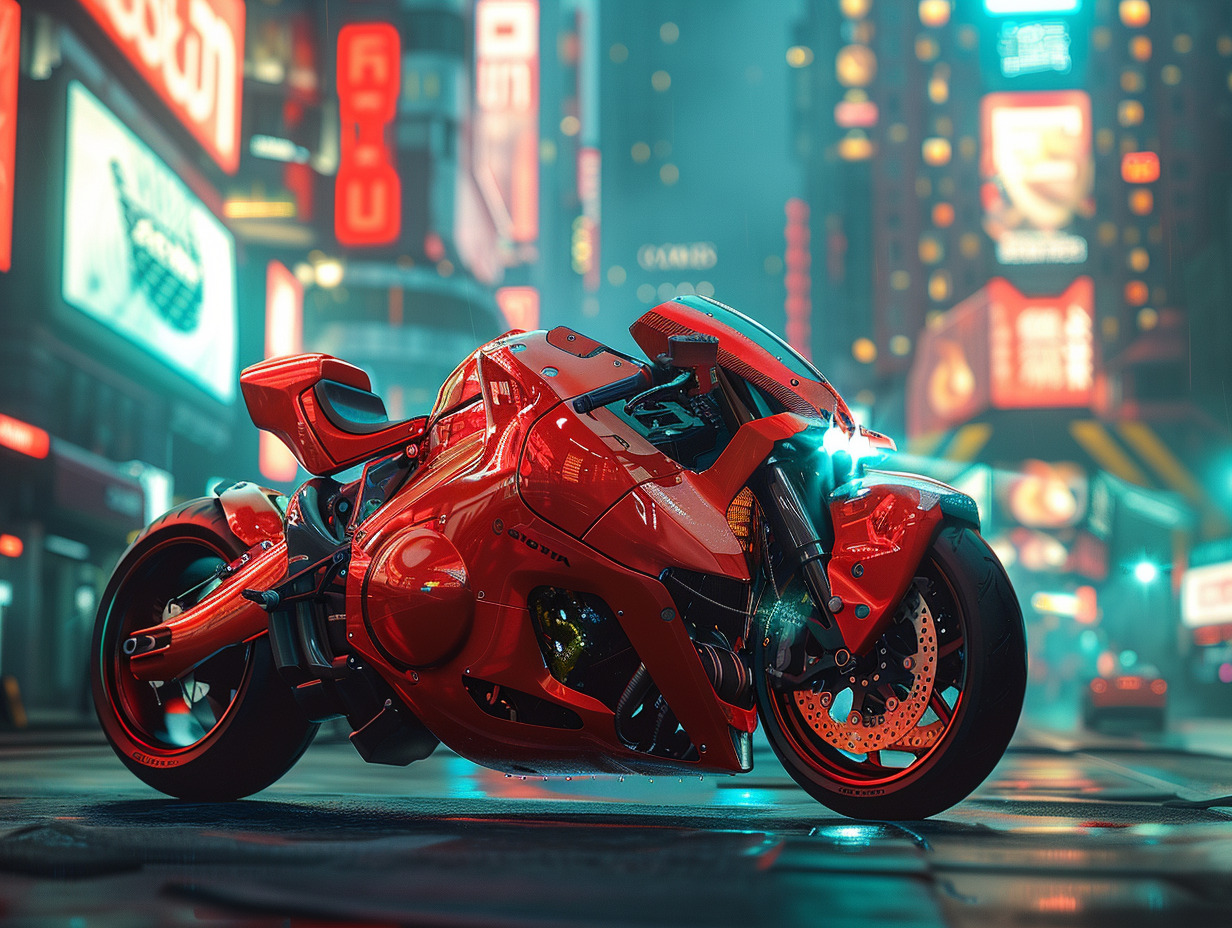
In the decades that followed, pop culture continued to celebrate the motorcycle, but with an evolution in representation. While the iconic motorcycles of the 70s and 80s maintained this image of rebellion, the 90s saw the emergence of a new form of technical and futuristic fascination: Akira, a Japanese animated film directed by Katsuhiro Ōtomo, is a perfect example. The Akira: red motorcycle, which has become an icon of motorcycle design, symbolizes both advanced technology and the desire to break the chains of a dystopian future.
The success of Akira had a considerable impact on the Anime genre and changed its perception worldwide. The red motorcycle, with its avant-garde aesthetic, transcended the film to become a cultural object in its own right, recognizable even by those who have never seen the film. This recognition is proof of an evolution of iconic motorcycles in pop culture: they are no longer just extensions of characters but protagonists in their own right.
The indelible mark left by these two-wheeled machines is not confined to the seventh art. From science fiction films to contemporary series, creators like Rian Johnson and the Duffer Brothers draw from the aesthetics and symbolism of the Akira universe. Kanye West, a figure in global music, also draws inspiration from this influence for his artistic creations. Movie motorcycles, from the Harley Davidson of Easy Rider to the futuristic motorcycle of Neo Tokyo, continue to roll through the layers of pop culture, inspiring beyond the screens and shaping a visual and conceptual legacy that endures.
The cultural impact of iconic motorcycles on cinema and beyond
Katsuhiro Ōtomo, through his work Akira, has not only marked manga and Japanese animation, but has also resonated loudly in the world of science fiction. Contemporary filmmakers like Rian Johnson acknowledge that they have drawn from this legacy in crafting their own dystopian worlds, as evidenced by the film Looper. Similarly, the Duffer Brothers admit the influence of Akira on the atmosphere and aesthetics of their hit series Stranger Things. These multiple references attest to the enduring cultural footprint left by iconic motorcycles, which transcend their initial role to become vectors of transmedia inspiration.
The artist Kanye West, a leading figure in the music industry, has also drawn from the visual and thematic repertoire of Akira to shape his artistic universe. The music video for his song ‘Stronger’ serves as a strong homage to Ōtomo’s film, reaffirming the ability of iconic motorcycles to influence diverse fields such as music, fashion, or design. Consider the company Bel&Bel, which stands out for its approach to reusing materials in the creation of everyday objects, including seats inspired by motorcycle aesthetics, demonstrating a fight against planned obsolescence and an ecological awareness.
The motorcycle, from the Harley Davidson of Easy Rider to the futuristic Neo Tokyo of Akira, has managed to traverse the ages to establish itself as a strong marker of pop culture. It now embodies a symbol of resistance, innovation, and identity. Tokyo, the birthplace of many trends, sees its motorcycle imagery perpetually reinvented by artists and creators who continue to draw from this reservoir of icons to create the visual mythologies of tomorrow.